
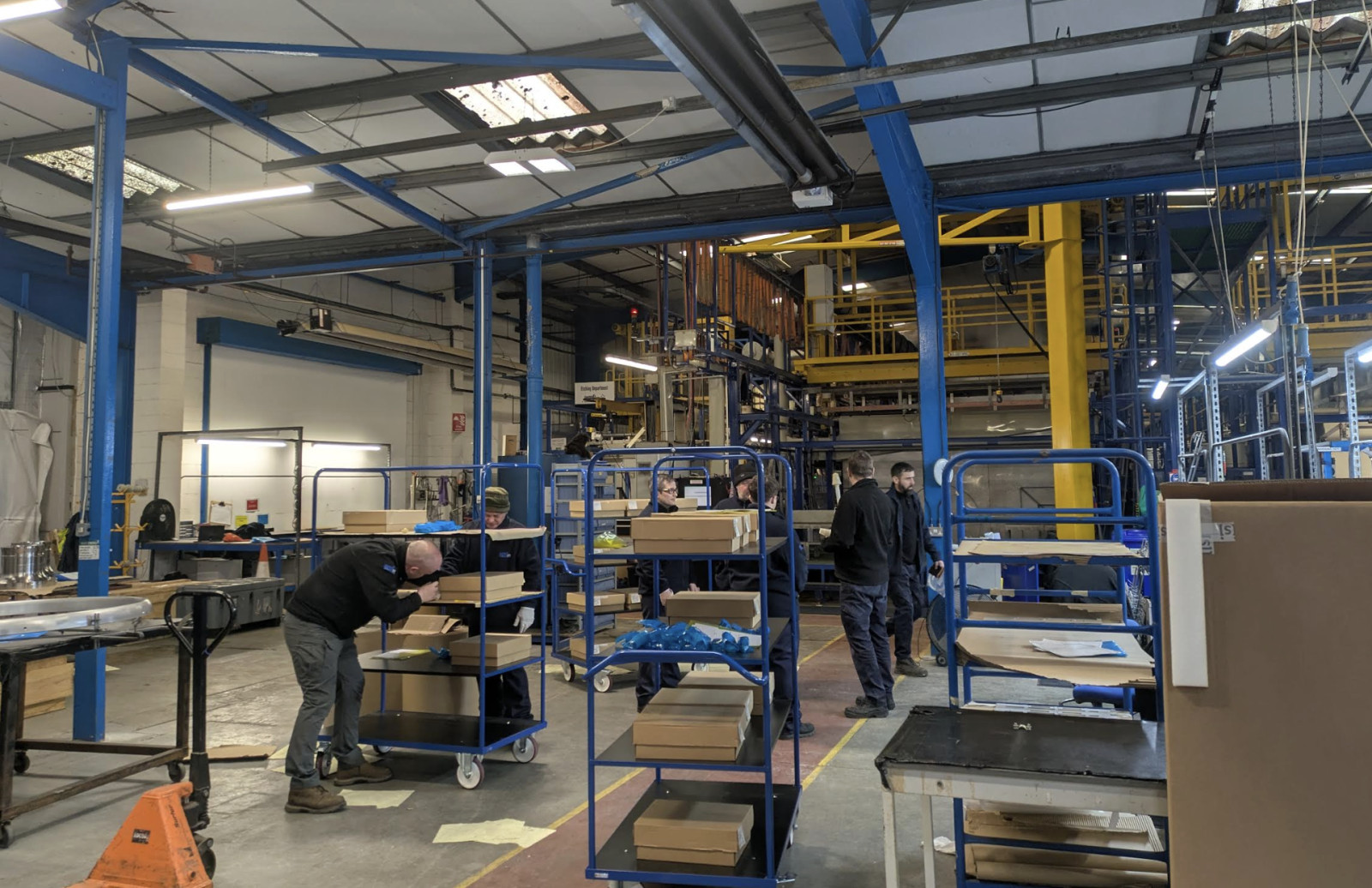
For Abbey Metal Finishing Company (Amfin), 2025 was a watershed moment that transformed the 78-year-old institution from a steady industry player into a force within the aerospace and defence sectors. This was not a success born of luck, but a calibrated "winning formula" that balanced technical heritage with modern efficiency. After years of post-pandemic recovery, the company emerged with its strongest sales performance to date, driven by a booming aerospace market and a strategic overhaul of operations.
Strategic Pruning for High-Performance Growth
At the heart of this transformation was a move to pivot away from a broad, "catch-all" service model toward a specialised, high-margin approach. For years, Amfin operated as a comprehensive "one-stop shop," but the team recognised that spreading expertise across dozens of plating processes was beginning to dilute profitability. By slimming down their plating offerings to focus on high-demand services like NDT (FPI), Chemical Etching/Etch Inspection and Anodising, they unlocked a new level of operational agility.
Business Development Manager Chris Peters, who has risen through the company ranks over the last quarter-century, views this focus as the primary catalyst for their record year. "As a business, we just had to look at it and see where the demand truly was," Chris reflects. "We’ve had to streamline operations to ensure that there’s real commercial success at the end of the day. By focusing our energy on the processes where we hold the strongest expertise, we aren’t just processing parts; we’re managing the chemistry and the capacity to better support our key primes.”
Expert Partnerships and Prime Approvals
The results of this "pruning" were almost immediate. By outsourcing targeted tasks to local specialists, and therefore improving operational efficiencies, Amfin preserved its reputation as a service leader while shielding its bottom line from astronomical energy costs. This shift allowed the company to focus internal resources more towards servicing global giants—customers who demand a level of precision that few other finishers can achieve.
A Cultural Shift: Leadership That Gels
This era of growth has also been fuelled by a cultural shift under the ownership of GIL Investments. Moving away from a more hands-off historical ownership, the new leadership applied a healthy pressure to modernise. Crucially, the management team itself has evolved into a more cohesive, synchronised unit. By promoting heavily from within—elevating veterans who have "grown up" with the business into senior management or directorships —Amfin has created a leadership team that truly gels. This shared history allows for faster decision-making and a unified vision that was previously missing.
"The new owners have put a spotlight on the business in exactly the right way," says Chris. "It’s made us more proactive. We aren’t just talking about positive changes anymore; we’re putting them in place. We can’t just stagnate; we have to move forward.”
The Power of Retained Knowledge
The human element remains Amfin’s most valuable asset. With a workforce now exceeding 60 employees and a Five-Year Strategic Plan projecting further growth, the company is looking toward 24/7 operations to meet the global backlog of aircraft orders. "The industry as a whole is getting better at understanding that what we do is not just an add-on; we are an integral part of the finished component," Chris notes.
As Amfin moves forward, it does so with a strong order book and a renewed sense of purpose. By honouring its 1947 roots while embracing the lean strategies of a modern SME, the company has proven that longevity, teamwork and innovation go hand-in-hand.